
YugabyteDB is a high-performance distributed SQL database designed to power cloud-native applications, microservices, and high-concurrency workloads. With PostgreSQL compatibility and NoSQL scalability, it provides a flexible solution for businesses needing a reliable, horizontally scalable database.
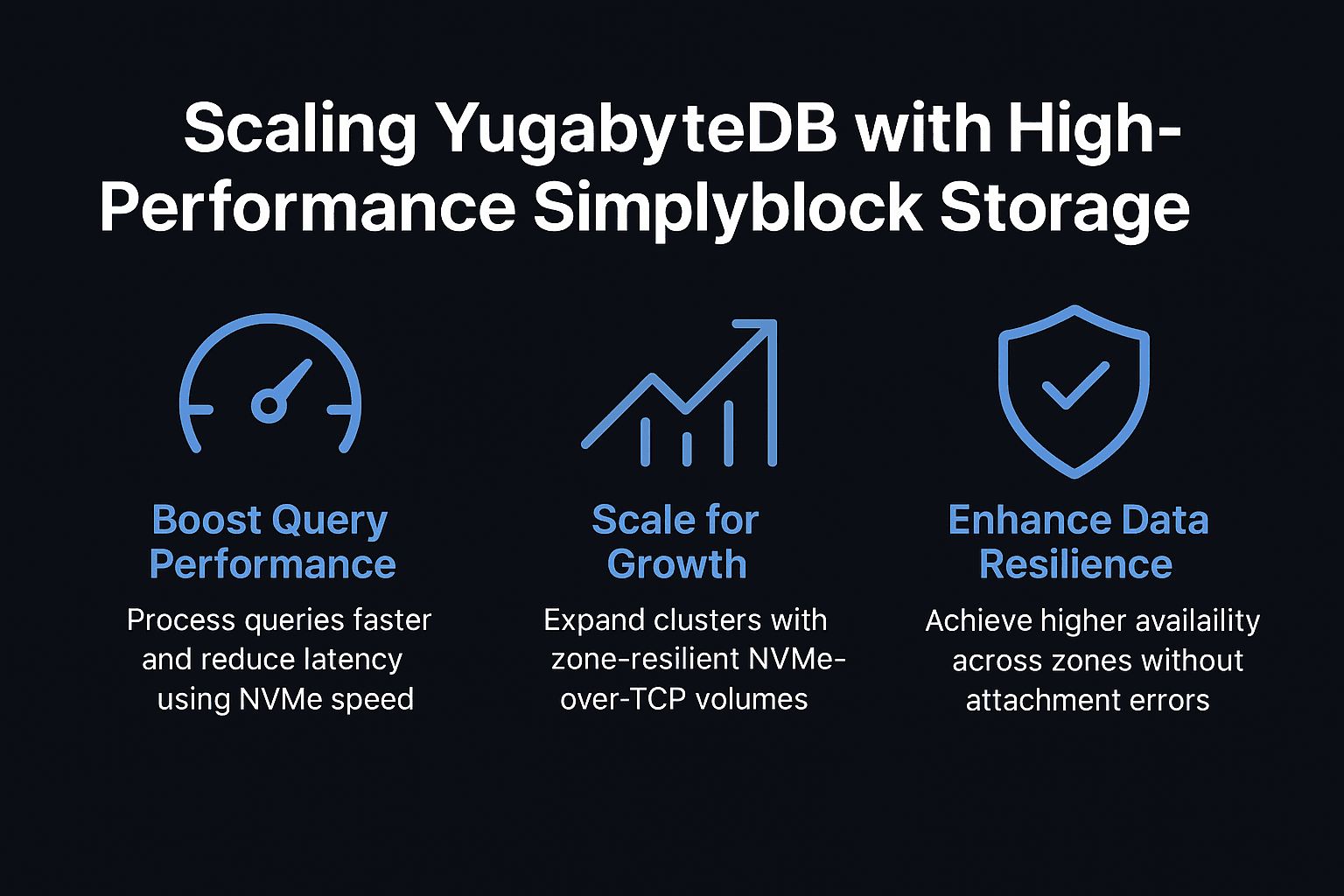
However, the storage layer is crucial to maintaining YugabyteDB’s performance, particularly when handling large datasets and high-volume transactions. Simplyblock delivers NVMe-over-TCP performance and zone-resilient storage, ensuring YugabyteDB can maintain high throughput, low latency, and seamless scaling for any distributed workload.
The Importance of High-Performance Storage for YugabyteDB
YugabyteDB relies on fast, reliable storage to handle the demands of distributed SQL databases. High-throughput writes, fast reads, and quick replication across multiple nodes are essential for minimizing transaction latency and ensuring consistent query performance.
Simplyblock provides low-latency, high-throughput storage, ensuring YugabyteDB can handle multiple concurrent operations without slowing down. With simplyblock’s NVMe-backed storage, YugabyteDB maintains its high performance, even under heavy data loads and high-concurrency scenarios.
🚀 Use Simplyblock with YugabyteDB for Faster Distributed SQL Performance
Ensure your distributed SQL workloads stay fast and scalable with simplyblock storage.
👉 Learn more about Cloud Cost Optimization – AWS Storage Tiering with simplyblock →
Step 1: Provision Simplyblock Volumes for YugabyteDB Data
To ensure optimal performance, YugabyteDB requires storage that supports both high throughput and low latency. Simplyblock allows you to provision NVMe-backed storage to ensure that data is quickly written and retrieved, even as your datasets grow in size.
sbctl pool create –name yb-pool
sbctl volume create –pool yb-pool –size 1Ti –name yb-data
mkfs.ext4 /dev/simplyblock/yb-data
mount /dev/simplyblock/yb-data /var/lib/yugabyte/data
This setup gives YugabyteDB the storage foundation needed to handle large datasets and high-concurrency workloads without sacrificing performance.
Step 2: Enable Low-Latency Writes for High-Concurrency Workloads
YugabyteDB needs to perform fast writes under heavy loads to keep up with high-concurrency workloads, especially for distributed transactions. On standard storage, slow writes lead to lag and increased transaction times, which impact the overall database performance.
Simplyblock provides fast write performance with low-latency NVMe storage, ensuring YugabyteDB can handle high-volume writes and distributed transactions without delay. This guarantees real-time data processing even with heavy workloads.
Learn more about maintaining low-latency write performance in distributed SQL systems with YugabyteDB Performance Tuning guide
Step 3: Support Scalable Queries Across Multiple Nodes
YugabyteDB’s architecture allows it to scale by distributing data across multiple nodes. However, as the number of nodes increases, querying across them can result in delays and performance degradation without the right storage infrastructure.
Simplyblock’s high-throughput, low-latency storage ensures that YugabyteDB can efficiently distribute queries across multiple nodes. This results in faster query performance and real-time analytics, even as the database scales horizontally.
Discover more about scaling queries in YugabyteDB to improve database performance across multiple nodes.
Step 4: Scale YugabyteDB Storage Dynamically
As your data grows, scalable storage is essential to avoid downtime or disruptions. Simplyblock allows you to resize volumes live without interrupting YugabyteDB’s operations. This flexibility enables you to expand storage dynamically as your data requirements increase.
sbctl volume resize –name yb-data –size 2Ti
resize2fs /dev/simplyblock/yb-data
This feature is crucial for ensuring that YugabyteDB can keep up with the growing volume of transactional data while maintaining performance and availability.
Step 5: Maintain High Availability Across Availability Zones
YugabyteDB’s distributed architecture means that high availability is essential, especially for mission-critical applications. If storage is tied to a single zone, failover or maintenance can disrupt database availability.
Simplyblock volumes are zone-independent, meaning YugabyteDB can continue operating even if nodes move across availability zones. This ensures continuous availability for high-availability workloads and helps maintain data consistency during failovers or scaling operations.
Learn more about high availability strategies from the YugabyteDB High Availability guide.
Simplyblock storage for YugabyteDB at scale
YugabyteDB provides a powerful solution for distributed SQL workloads, but its performance depends on the storage supporting it. Simplyblock’s high-performance NVMe-backed storage, dynamic scalability, and zone resilience make it the perfect fit for YugabyteDB’s needs.
For businesses running cloud-native applications or microservices, simplyblock provides the secure, high-throughput storage that ensures YugabyteDB performs consistently, even as workloads and data scale.
Questions and Answers
Simplyblock advances YugabyteDB performance with high-throughput NVMe storage, minimizing latency and maximizing IOPS. This ensures faster query processing, high availability, and improved consistency for large-scale, distributed YugabyteDB clusters.
YugabyteDB requires fast, scalable storage to handle distributed database workloads. Simplyblock offers software-defined storage that ensures low-latency access, automatic scaling, and consistent performance, making it ideal for growing YugabyteDB clusters with high data throughput.
Yes. Simplyblock supports YugabyteDB’s high availability with replication and failover, ensuring continuous data access across multiple nodes. This guarantees consistent database operations even during failures, ensuring your YugabyteDB deployment remains reliable.
Simplyblock’s instant snapshots and data replication ensure YugabyteDB maintains consistency during scaling. This prevents data loss during node additions or rebalancing, ensuring seamless scaling for mission-critical, distributed workloads without downtime.
Yes. Simplyblock’s cloud storage cost optimization provides NVMe-class performance at a lower cost, outperforming cloud-native disks in throughput, latency, and scalability. YugabyteDB benefits from faster data processing and better cost efficiency in cloud environments.