Kubernetes Block Storage
Terms related to simplyblock
Kubernetes has become the go-to platform for container orchestration, allowing teams to deploy, manage, and scale applications across various environments. However, for stateful applications that require persistent storage, Kubernetes needs more than its built-in storage solutions. Kubernetes Block Storage provides the durable, high-performance storage necessary to support these workloads effectively.
With Kubernetes block storage, data persists across container restarts and reschedules, offering reliable, scalable storage for applications like databases, caches, and message queues. This ensures that critical data remains intact even when containers or pods are dynamically managed within a Kubernetes cluster.
How Kubernetes Block Storage Works
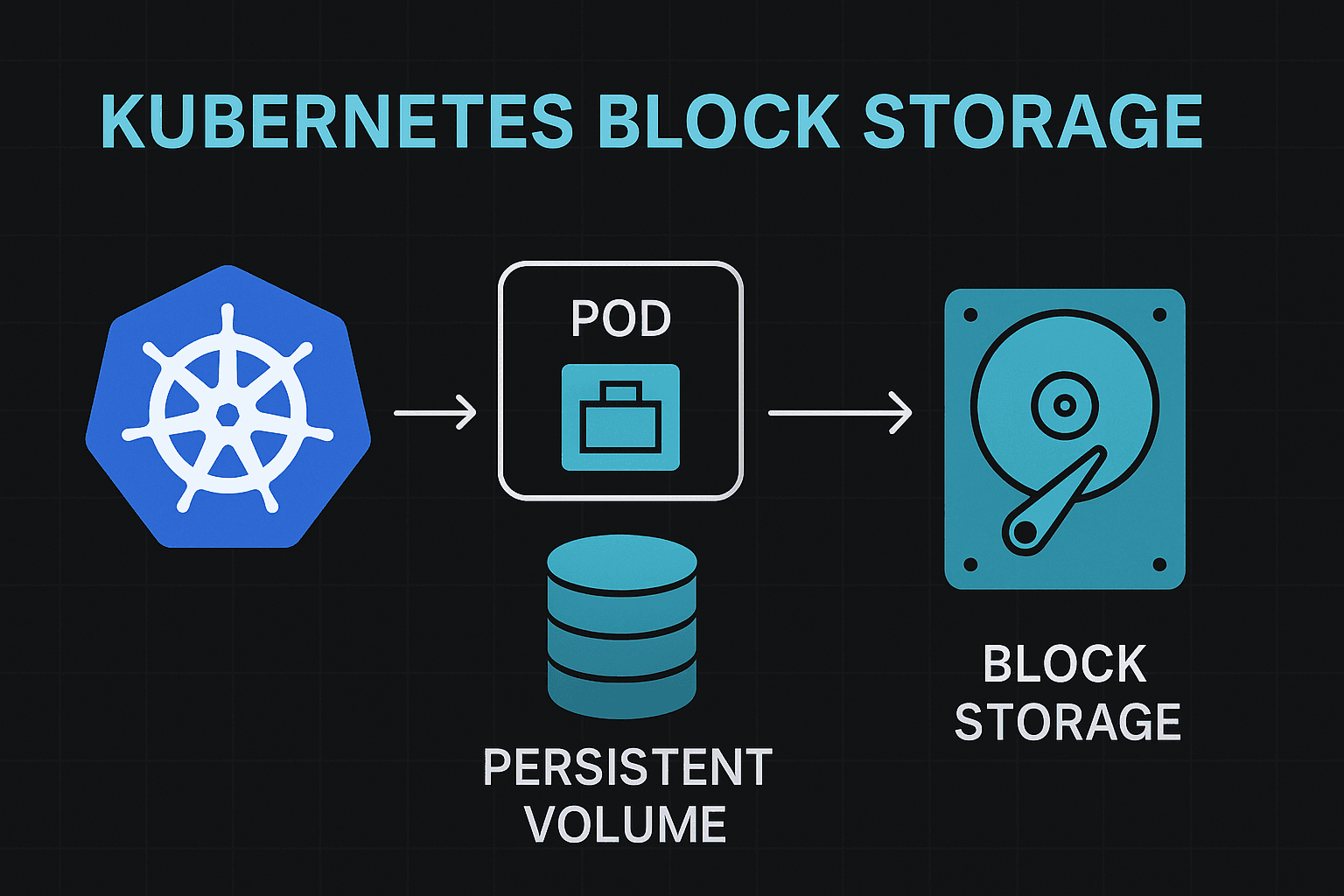
Kubernetes Block Storage works by creating PersistentVolumes (PVs) that act as raw disk devices for containers, making it easy to store stateful application data reliably. These volumes are managed through PersistentVolumeClaims (PVCs), which ensure storage is dynamically allocated and properly provisioned within the Kubernetes cluster.
Rather than managing individual storage devices or worrying about the specific physical infrastructure, Kubernetes abstracts this complexity by presenting volumes as easy-to-manage virtualized storage. The underlying hardware can vary, from SSDs to cloud storage, but Kubernetes handles all the provisioning, attachment, and management automatically, reducing manual overhead.
🚀 Simplify Kubernetes Block Storage at Scale
Use simplyblock to eliminate storage complexity and enhance performance for stateful applications.
👉 Optimize Kubernetes Block Storage with simplyblock →
Kubernetes Block Storage in Action
When Kubernetes block storage is integrated into your infrastructure, it enables stateful applications like PostgreSQL, MongoDB, or Redis to scale effectively. Whether you’re running your Kubernetes cluster on-premises, in the cloud, or in a hybrid environment, Kubernetes block storage allows your workloads to connect to persistent volumes that dynamically scale based on the demands of your application.
This storage abstraction makes it simple to scale infrastructure independently from compute resources. As application workloads grow, Kubernetes can automatically scale the persistent storage volumes to meet new performance needs, ensuring minimal disruption to your application’s functionality.
Key Benefits of Kubernetes Block Storage
Implementing Kubernetes Block Storage provides several critical advantages, especially when scaling cloud-native applications. Here’s how it enhances your infrastructure:
- Reliable and Persistent Data Storage: Block storage ensures data is consistently available, even when pods are rescheduled, applications are scaled, or nodes are replaced.
- Performance at Scale: Kubernetes block storage allows for low-latency, high-throughput access to persistent volumes, ensuring high performance for mission-critical applications like databases and caching systems.
- Seamless Scalability: Kubernetes enables dynamic provisioning of storage volumes, making it easy to scale storage independently from compute resources as your application grows.
- Cloud-Agnostic Flexibility: Whether your infrastructure is on-premises, in a private cloud, or multi-cloud, Kubernetes block storage abstracts the physical infrastructure, offering consistent management across environments.
Comparing Kubernetes Block Storage to Other Storage Solutions
When considering storage solutions for Kubernetes, it’s essential to understand how Kubernetes Block Storage compares to other common storage types. Here’s a quick comparison:
| Feature | Kubernetes Block Storage | Object Storage | File Storage |
| Storage Type | Block-level storage | Object storage | File-based storage |
| Performance | High, low latency | Moderate | Moderate |
| Ideal for | Databases, messaging | Backups, static files | Shared file systems |
| Scalability | Dynamic scaling | High | Moderate |
| Data Consistency | Strong consistency | Eventual consistency | Strong consistency |
Kubernetes block storage stands out in environments where high performance and low latency are crucial, such as real-time data processing or database management. While object storage is ideal for storing unstructured data and file storage is more suitable for shared file systems, Kubernetes Block Storage provides the persistent and low-latency storage necessary for stateful applications.
How Kubernetes Block Storage Helps Stateful Applications Scale
Stateful applications need more than just persistent data—they require storage that is both reliable and scalable. Kubernetes Block Storage helps ensure that these applications scale effectively, no matter how the infrastructure evolves.
For example, as a PostgreSQL database scales to accommodate more data or higher traffic, Kubernetes can automatically allocate and resize storage volumes as needed. By abstracting storage from compute resources, Kubernetes allows you to scale both compute and storage independently, ensuring that performance and consistency are maintained throughout.
Additionally, features like snapshots and replication built into Kubernetes block storage make it easier to create backups and recover data quickly, which is crucial for maintaining high availability in production environments.
How Simplyblock Simplifies Kubernetes Block Storage
Simplyblock is a storage platform specifically designed to optimize and simplify Kubernetes Block Storage management. By removing the operational complexity associated with traditional storage solutions, simplyblock provides a seamless and scalable solution for Kubernetes environments.
Here’s how simplyblock can simplify your Kubernetes block storage:
- Native CSI support for easy integration and dynamic provisioning.
- High-performance NVMe-over-TCP storage ensures your applications perform at scale.
- Snapshot and rollback functionality ensure data protection and simplify recovery.
- Volume isolation allows for multi-tenant environments, making it ideal for shared Kubernetes clusters.
Simplyblock enables Kubernetes to manage block storage with minimal overhead, freeing up your team to focus on building and scaling applications, rather than managing storage infrastructure.
Monitoring Kubernetes Block Storage – Key Metrics to Track
When using Kubernetes Block Storage, monitoring the health and performance of storage volumes is critical. Key metrics to track include:
- Latency Trends: Track how long it takes to read and write data to storage volumes.
- Volume Health: Ensure volumes are properly provisioned, attached, and functioning correctly without issues.
- Capacity Usage: Monitor storage utilization to avoid overcommitment and ensure there’s enough space for growth.
While Kubernetes CSI drivers provide basic metrics, third-party observability tools can offer deeper insights into storage performance, helping identify issues before they impact your applications.
Kubernetes Block Storage – The Future of Cloud-Native Storage
As Kubernetes continues to drive the adoption of cloud-native applications, storage needs will only grow. Kubernetes Block Storage offers the ideal solution for persistent, scalable, and high-performance storage required by stateful applications.
With the right integration and management tools like simplyblock, Kubernetes block storage can be easily scaled, managed, and monitored without the operational complexity of traditional storage systems. As Kubernetes continues to evolve, block storage will remain a key building block for cloud-native infrastructure, ensuring that applications remain fast, reliable, and scalable.
Related Terms
Teams often review these glossary pages alongside Kubernetes Block Storage when they implement CSI-based lifecycle automation, validate snapshot workflows, and benchmark storage performance for stateful applications.
CSI Snapshot Controller
Volume Snapshotting
Network Storage Performance
Storage Orchestration
CSI Ephemeral Volumes
Kubernetes AccessModes vs VolumeModes
Kubernetes Raw Block Volume Support
Questions and Answers
Kubernetes Block Storage provides persistent, high-performance storage for containerized applications. It allows stateful applications to store and manage data independently of container lifecycles, ensuring data remains intact even if a container is restarted or rescheduled. This is especially important for applications like databases and other services that require stable, low-latency storage.
Kubernetes Block Storage improves application performance by providing scalable, dynamically provisioned, and persistent storage. It allows applications to store and retrieve data quickly, ensuring high throughput and low latency, which is essential for high-performance workloads, particularly databases and analytics services.
Using Kubernetes Block Storage with NVMe (Non-Volatile Memory Express) offers substantial performance gains due to NVMe’s lower latency and higher IOPS (Input/Output Operations Per Second). This combination ensures fast data access and supports high-demand applications, improving overall system responsiveness and efficiency in Kubernetes environments.
Integrating Kubernetes Block Storage into your cluster involves using a Container Storage Interface (CSI) driver to enable dynamic provisioning of persistent volumes. After setting up the appropriate storage class, Kubernetes will automatically provision and manage block storage for stateful applications, ensuring seamless scalability and reliability.
Best practices for managing Kubernetes Block Storage include using automated backup solutions, optimizing storage performance through proper configuration, and leveraging encryption for data security. Additionally, setting appropriate resource requests and limits for persistent volumes and monitoring storage usage to prevent over-provisioning or resource wastage are essential for effective management.