Openshift Container Storage
Terms related to simplyblock
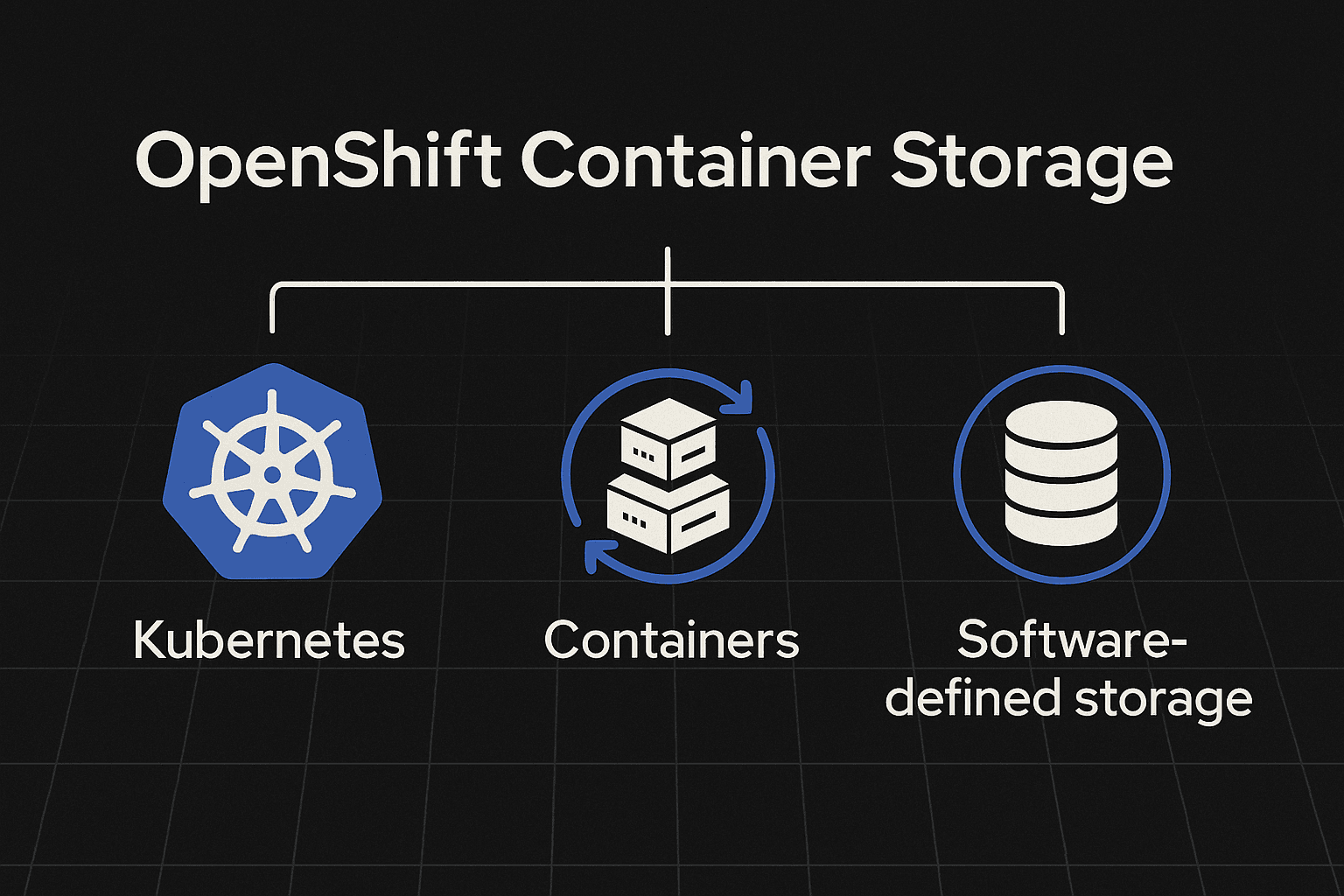
Managing persistent storage for stateful applications in containerized environments can be challenging. OpenShift Container Storage (OCS) is a software-defined storage solution that integrates with Kubernetes and OpenShift to provide scalable, reliable, and high-performance storage for containerized workloads. By abstracting physical storage resources and enabling dynamic provisioning, OCS simplifies storage management for cloud-native applications.
How OpenShift Container Storage Works
OpenShift Container Storage is built on software-defined storage (SDS) and integrates with Kubernetes to provide persistent storage for containers. Unlike traditional storage systems, OCS abstracts the underlying hardware, making storage flexible and easier to scale. Whether you’re working with block, file, or object storage, OCS allows you to manage all your storage needs within your Kubernetes environment without the complexity of manual configurations or hardware management.
OCS uses the Container Storage Interface (CSI) for seamless integration with Kubernetes. It allows dynamic provisioning of storage volumes and includes features like replication, failover, and disaster recovery, ensuring high availability and data protection for critical applications.
🚀 Simplify OpenShift Container Storage with Simplyblock
Improve performance and streamline storage management for OpenShift Container Storage.
👉 Optimize OpenShift Container Storage with Simplyblock →
The Role of OpenShift Container Storage in Kubernetes
Kubernetes is ideal for managing stateless applications, but stateful workloads require persistent storage. While Kubernetes provides abstraction through PersistentVolumes (PVs) and PersistentVolumeClaims (PVCs), these can be difficult to manage without a proper storage solution. OpenShift Container Storage addresses this by offering integrated persistent storage for Kubernetes environments.
OCS supports dynamic provisioning, high availability, and efficient storage management, ensuring that applications continue to perform reliably as infrastructure grows and scales.
Key Benefits of OpenShift Container Storage
OpenShift Container Storage offers several advantages for Kubernetes environments:
- Dynamic, Scalable Storage: OCS automatically provisions storage as needed, allowing you to scale efficiently across clusters without manual intervention.
- High Availability and Redundancy: OCS protects data with built-in replication and failover, reducing downtime risk.
- Kubernetes Integration: Fully integrated with Kubernetes, OCS makes storage management as straightforward as managing containerized applications.
- Hybrid and Multi-Cloud Flexibility: OCS works across on-premises and cloud environments, providing flexibility for hybrid and multi-cloud setups.
- Performance Optimization: OCS provides high performance for stateful workloads, such as databases and analytics, ensuring optimal resources.
How OpenShift Container Storage Supports Stateful Workloads
Stateful applications, like databases and message queues, need consistent and reliable storage. OpenShift Container Storage provides persistent storage that is dynamically allocated and managed across Kubernetes environments.
By abstracting storage from the underlying hardware, OCS enables seamless scaling of infrastructure. Features like snapshots, backups, and disaster recovery ensure data protection with minimal complexity.
OpenShift Container Storage vs Traditional Storage Models
When compared to traditional storage solutions like Direct-Attached Storage (DAS) or Storage Area Networks (SAN), OpenShift Container Storage (OCS) offers clear advantages:
| Feature | Traditional Storage (DAS/SAN) | OpenShift Container Storage |
| Scalability | Limited, often static and hardware-bound | Horizontal, dynamic scaling across clusters |
| Provisioning | Manual, static setup | Automated, dynamic provisioning with CSI |
| High Availability | Manual configuration, often limited | Built-in replication, failover, and redundancy |
| Snapshot & Backup | Tool-dependent, often external tools | Native, integrated snapshots and backups |
| Flexibility | Hardware-dependent, vendor-specific | Cloud-native, hybrid, and multi-cloud support |
How Simplyblock Enhances OpenShift Container Storage
Simplyblock enhances OpenShift Container Storage (OCS) by offering additional storage virtualization features for Kubernetes environments. By integrating with OCS, Simplyblock provides:
- High-Performance Storage: NVMe-over-TCP ensures fast data access and low latency for demanding workloads.
- Dynamic Provisioning: Seamlessly integrates with OCS’s CSI support for automated storage provisioning.
- Multi-Tenant Isolation: Easily isolates storage volumes across tenants and namespaces, ensuring security and efficient resource management.
- Snapshots and Rollback: Built-in snapshot and rollback features simplify data protection and recovery.
- Thin Provisioning & Scalable Throughput: Supports efficient storage utilization with thin provisioning while providing scalable throughput for growing applications.
Simplyblock reduces the complexity of storage management, enhancing OCS with improved performance and scalability, making it ideal for Kubernetes-native workloads.
Why OpenShift Container Storage Is Ideal for Kubernetes-Native Workflows
As cloud-native applications grow, traditional storage systems are often too rigid and complex for dynamic environments. OpenShift Container Storage, combined with solutions like Simplyblock, provides a flexible, scalable, and easy-to-manage storage solution for Kubernetes.
OCS simplifies managing storage across hybrid cloud environments and delivers the performance and availability needed for containerized applications. Whether you’re managing microservices, stateful applications, or multi-cloud infrastructure, OCS scales storage in line with applications, reducing manual overhead.
Visibility and Monitoring – What to Watch For
With abstraction comes complexity, which is why monitoring OpenShift Container Storage is essential. Storage metrics should go beyond basic capacity and throughput, including data like latency, IOPS (Input/Output Operations Per Second), volume health, and potential overcommitment.
Use Kubernetes-native monitoring tools like Prometheus, or integrate third-party observability platforms to track performance and detect issues before they affect workloads. Monitoring helps ensure storage performance aligns with application needs and can provide early warnings for scaling or performance problems.
Related Terms
Teams often review these glossary pages alongside OpenShift Container Storage when they evaluate Ceph-based design choices, tune failure-domain behavior, and set durability targets for stateful workloads on OpenShift.
OpenShift Data Foundation (ODF)
CRUSH Maps
Hybrid Erasure Coding
Ceph
Questions and Answers
OpenShift Container Storage supports stateful applications by providing persistent volumes that retain data even when containers are restarted or rescheduled. This ensures high availability and consistency for applications like databases and messaging systems, which require reliable, durable storage for their data.
OpenShift Container Storage offers several benefits for Kubernetes environments, including simplified management of persistent storage, scalability, and performance optimization. It integrates seamlessly with OpenShift and Kubernetes, allowing users to provision, scale, and secure storage for containerized applications while reducing complexity and enhancing operational efficiency.
To deploy OpenShift Container Storage, you need to install the OpenShift Container Storage Operator on your OpenShift cluster. After installation, you can create and manage storage resources directly from the OpenShift console. It supports different storage backends, including block, file, and object storage, to suit your infrastructure needs.
Best practices for managing OpenShift Container Storage include configuring storage classes according to application requirements, ensuring redundancy for high availability, and regularly monitoring storage performance and usage. Additionally, implementing data protection strategies like automated backups and encryption is vital to maintaining data security and integrity.
Yes, OpenShift Container Storage is designed for scalability, allowing it to grow with the needs of large, dynamic environments. It supports automatic scaling of storage resources based on the demands of containerized workloads, ensuring that the storage platform can handle fluctuating workloads efficiently while maintaining high performance.